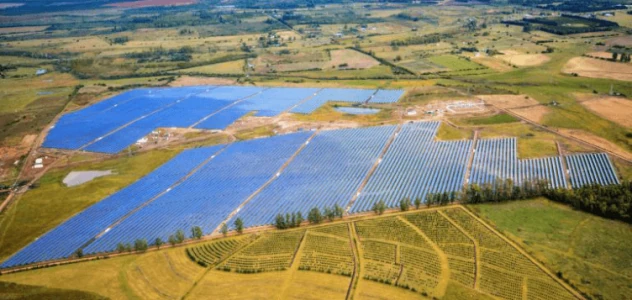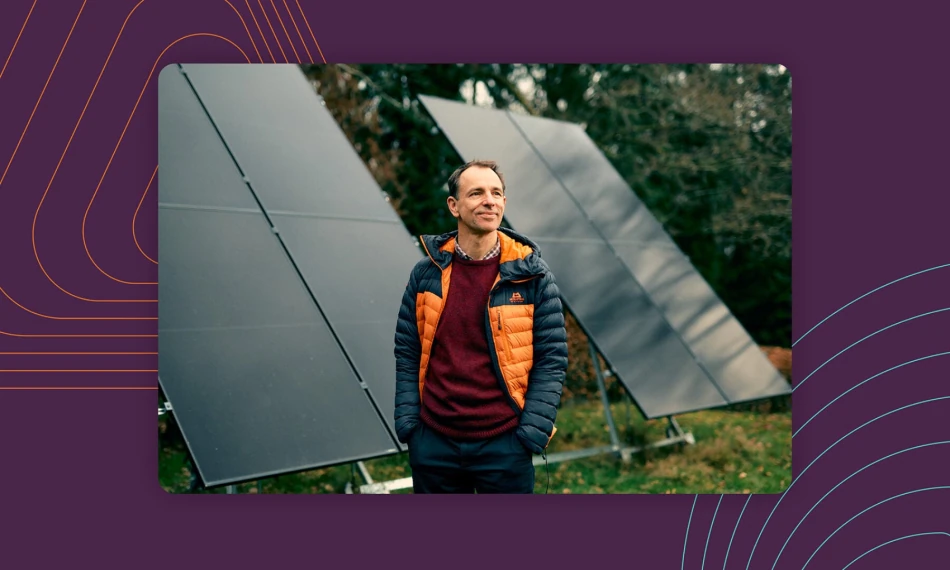

The basic appearance of solar power does not hide the need for creative solutions and technical expertise to achieve maximum performance. The team at Corrie Energy under Jo Fleming developed their innovative solution through a homemade prototype made from biscuit tins which they tested in their backyard garden. The team developed a solution which increases solar power generation by 30% for northern regions.
The design concept derives from the appearance of a sunflower. Fleming proposed that solar panels should operate in the same way plants do when they track sunlight. Sun-tracking panels exist as a product but their design focuses on areas which receive direct sunlight when the sun reaches its peak position in the sky. The sun's position in Britain and comparable areas remains low which makes current systems either too complicated or too costly to maintain.
Fleming and his team dedicated multiple years to develop a basic tracking system which consists of a single structure that tracks solar movement in essential areas. The system achieves performance through standard components which replace easily while skipping unproductive dawn and dusk operation times. The Latitude40 system from their company has reached commercial readiness after multiple years of development and £1 million of funding. The system provides a functional solution to extract maximum energy from restricted areas.
Physicist Henry Snaith operates at the opposite end of the solar revolution because his research has the potential to revolutionize both energy production amounts and power generation locations. Snaith started his work at a time when solar power systems exceeded what most people could afford to pay. He chose to view this situation as a chance to enhance the system.
His scientific work took him past typical silicon panels to study perovskites which are thin flexible materials that enable better solar spectrum absorption through layering. The results were dramatic. The efficiency rate increased from 6% to 10% during the first few months before reaching 27% in 2024 which matched silicon's peak performance while showing potential for additional improvement.
Perovskites enable surface power generation for buildings and vehicles and common objects which can be used to generate electricity. Snaith uses his research to develop Oxford PV which has become a company that works to commercialize this technology.
The innovations starting from garden-table experiments to lab-based breakthroughs demonstrate a shared principle which enhances solar technology through smarter and simpler and more adaptable solutions. The authors demonstrate that clean energy will become omnipresent because it will possess enhanced power capabilities.